
Personalized mRNA Treatment Shows Promise in Melanoma Trial
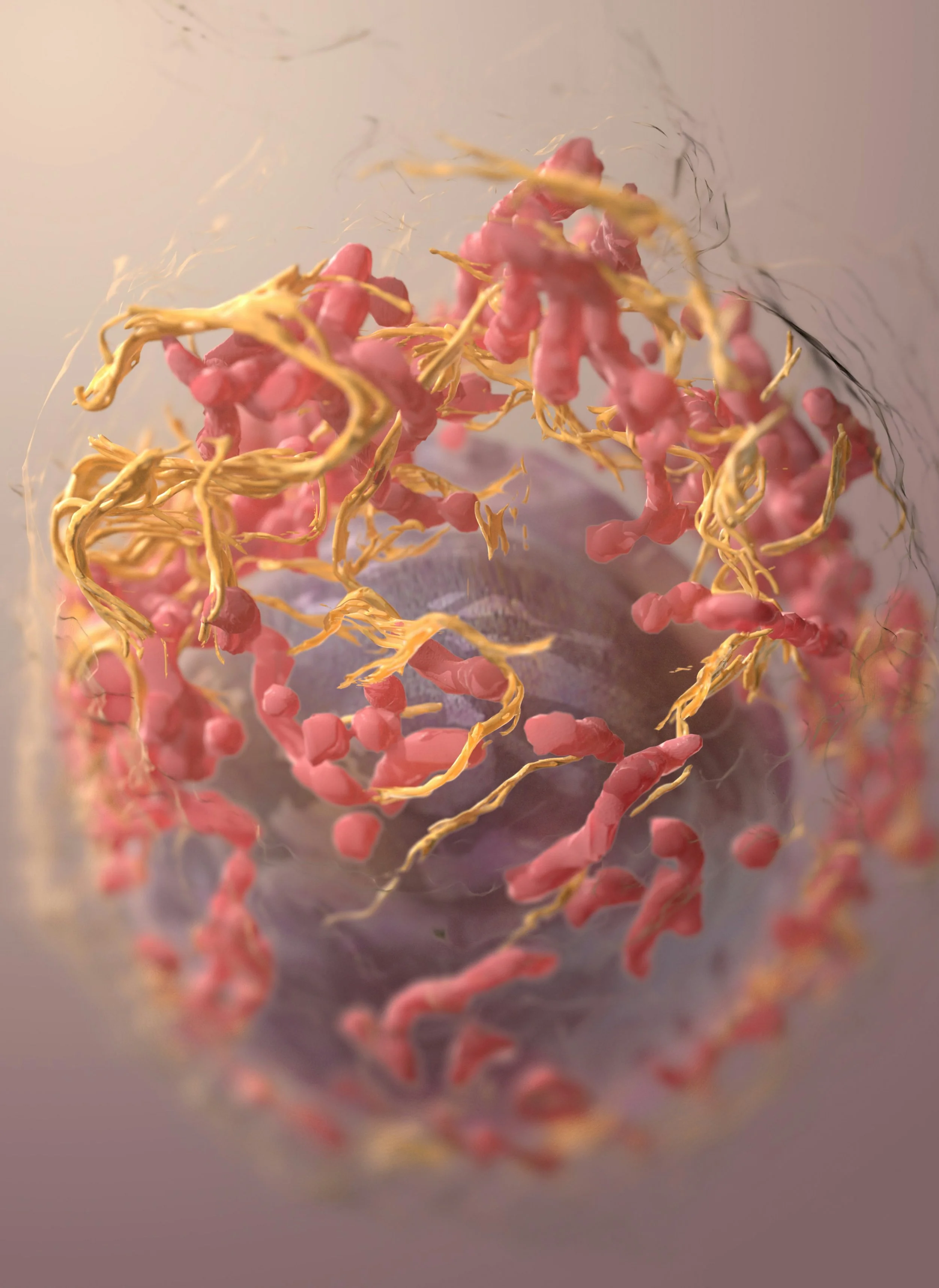
3D structure of a melanoma cell derived by ion abrasion scanning electron microscopy.
A personalized mRNA-based treatment is showing encouraging results in the effort to prevent melanoma from returning after surgery.
Moderna and Merck announced this week that a Phase 3 clinical trial of an individualized treatment called intismeran autogene, given alongside the immunotherapy drug Keytruda (pembrolizumab), improved outcomes for patients with high-risk melanoma compared with Keytruda alone. (Moderna News)
How Does the Treatment Work?
Unlike vaccines designed to prevent an infection, this treatment is intended for people who have already been diagnosed with cancer.
Researchers analyze a sample of an individual patient’s tumor to identify its particular genetic mutations. A personalized mRNA treatment is then created using information from those mutations. The goal is to help the patient’s immune system recognize characteristics unique to the cancer cells and respond to them more effectively. (CBS News)
The approach uses some of the same underlying mRNA technology that became widely known through COVID-19 vaccines, but applies it in a very different way: each cancer treatment is designed specifically for an individual patient.
What Did the Study Find?
The Phase 3 trial included 1,137 patients with stage IIB through stage IV melanoma whose tumors had been completely removed by surgery. Researchers compared patients receiving the personalized mRNA treatment plus Keytruda with those receiving Keytruda alone.
According to the companies’ initial announcement, the combination produced statistically significant improvements in both recurrence-free survival, or the length of time patients remained free of a return of their cancer, and distant metastasis-free survival, which measures the time before cancer spreads to another part of the body. No new safety concerns were identified in the initial results. (Moderna News)
The companies have not yet released the complete Phase 3 data, including detailed numbers showing the size of the benefit. The study is continuing to evaluate additional outcomes, including overall survival.
What Does This Mean for Patients?
The findings are significant because this is the first Phase 3 study to report positive results for an individualized mRNA-based cancer treatment. However, the treatment remains investigational and is not currently an FDA-approved melanoma therapy.
Merck and Moderna plan to present the full study results at an upcoming medical meeting and discuss the findings with regulatory authorities. Researchers are also studying this approach in several other cancers, including lung, bladder and kidney cancers. (Moderna News)
For patients, the study represents an important development in a broader area of cancer research: using the specific biological characteristics of an individual’s tumor to help guide treatment. More information will become available as the complete trial results are published and reviewed by independent researchers and regulators.
Source: CBS News; additional clinical trial information from Moderna and Merck. (CBS News)